
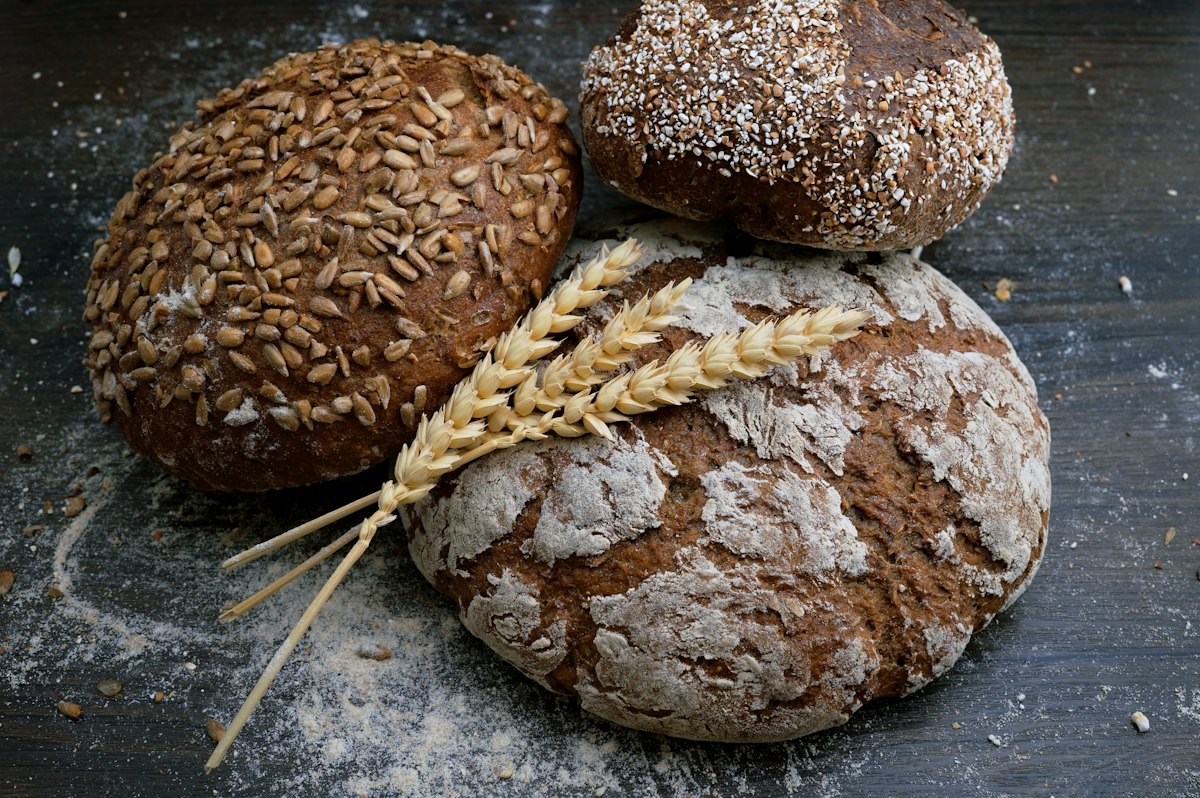
Acrylamide (2-propenamide, C₃H₅NO) is a process-induced chemical contaminant classified by the International Agency for Research on Cancer (IARC) as a Group 2A probable human carcinogen. Discovered in thermal food processing systems in 2002, acrylamide generates predominantly in carbohydrate-rich matrices subjected to temperatures exceeding 120°C—such as potato crisps, french fries, roasted coffee, breakfast cereals, and toasted bakery wares. Its formation is an unintended branch of the complex Maillard cascade, requiring rigorous mechanistic kinetic control and enzymatic mitigation.
Contents3 sections
1. Introduction: The Asparagine-Hexose Condensation and Azomethine Ylide Decarboxylation
The primary biosynthetic pathway of dietary acrylamide involves the non-enzymatic condensation of the free amino acid L-asparagine with reducing hexose sugars (predominantly D-glucose and D-fructose) or alpha-dicarbonyl intermediates (methylglyoxal and 3-deoxyglucosone). The reaction initiates through nucleophilic attack by the unprotonated alpha-amino group of asparagine onto the carbonyl carbon of the sugar, forming an unstable tetrahedral carbinolamine that dehydrates into a reversible Schiff base (N-glucosylasparagine).
Under sustained thermal activation (T > 120°C), the Schiff base undergoes irreversible irreversible beta-elimination and decarboxylation via an azomethine ylide intermediate. Rather than proceeding exclusively through the traditional Amadori or Heyns rearrangement, the decarboxylated azomethine ylide fragments via Strecker-type degradation or direct thermal cleavage of the C-N bond, eliminating the carbohydrate moiety and releasing volatile 2-propenamide. Kinetic accumulation follows Arrhenius-type temperature dependency up to approximately 175°C, beyond which competitive thermal decomposition and polymer incorporation outpace synthesis, causing an apparent decline in free acrylamide levels.
2. Technical Analysis: Limiting Reactant Thermodynamics and Industrial Benchmark Mitigations
In cereal grains (wheat, rye), free asparagine acts as the rate-limiting substrate (ranging from 0.5 to 2.5 g/kg), whereas reducing sugars are in excess. Conversely, in potato processing, reducing sugar concentrations dictate acrylamide yields, with cold-induced sweetening (sucrose conversion via vacuolar invertase at storage T < 8°C) drastically compounding toxicological risk:
pH and Multivalent Cation Inhibition: Acidifying dough matrices (pH < 5.0) protonates the alpha-amino nitrogen of asparagine (pK_a ≈ 8.8), preventing nucleophilic addition to the carbonyl carbon. Similarly, the addition of divalent cations (Ca²⁺ and Mg²⁺ in the form of calcium chloride or calcium lactate) forms coordination complexes with the amino group, reducing acrylamide yields by 40% to 65% in fried potato chips.
Enzymatic L-Asparaginase Bio-Catalysis: The most elegant industrial intervention utilizes fungal or bacterial L-asparaginase (EC 3.5.1.1) derived from Aspergillus niger or Aspergillus oryzae. Prior to baking, the enzyme catalyzes the stoichiometric deamidation of L-asparagine into L-aspartic acid and ammonium:
| Food Matrix Category | Thermal Process Regime | Baseline Acrylamide (μg/kg) | Mitigation Strategy Applied | Reduction Efficiency (%) |
|---|---|---|---|---|
| Potato Crisps (Chips) | Deep-frying at 175 – 185 °C | 800 – 1800 | Hot water blanching + 0.5% CaCl₂ wash | 60% – 75% reduction |
| Wheat Crackers / Biscuits | Tunnel oven baking at 200 – 220 °C | 350 – 900 | L-Asparaginase (1000 – 2000 ASNU/kg flour) | 85% – 95% reduction |
| Roasted Specialty Coffee | Hot air fluidized bed at 210 – 240 °C | 200 – 500 | Bean selection + high-temperature short-time roast | 30% – 45% degradation |
| Rye Crispbread | Continuous impingement at 230 °C | 500 – 1400 | Vacuum finishing (T < 110 °C) + enzyme soak | 80% – 90% reduction |
3. Conclusion & Industrial Implications: EU Benchmark Compliance and Vacuum Baking Systems
The enforcement of European Commission Regulation (EU) 2017/2158 has established strict benchmark levels for acrylamide across food categories (e.g., 500 μg/kg for potato crisps, 300 μg/kg for crackers). Achieving compliance without compromising desirable crust color, volatile pyrazine aromas, or crisp textural attributes necessitates combined technologies. Pairing enzymatic asparagine depletion in dough preparation with vacuum-assisted baking—which lowers the boiling point of moisture and allows final moisture reduction below 110°C—eliminates toxic intermediate generation while preserving complete sensory excellence.
 Mehmet Sandikci