
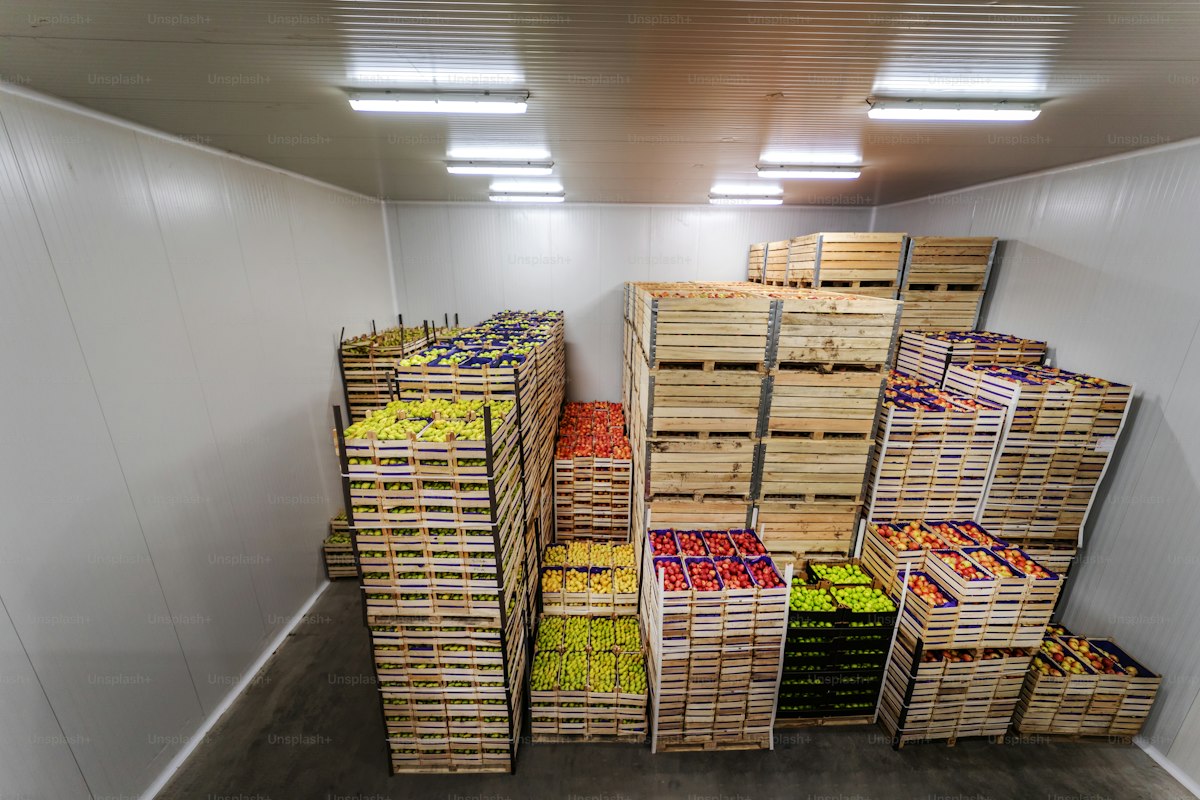
Within food engineering and supply chain systems, the “cold chain” designates an uninterrupted temperature-controlled logistics infrastructure safeguarding perishable commodities from primary harvest or slaughter through industrial processing, distribution, retail holding, and domestic storage. Any episodic temperature abuse accelerates microbial growth kinetics exponentially, compromising food safety irrespective of whether physical thaw occurs.
1. Introduction: Cold Chain Thermodynamics and Microbial Growth Kinetics
During logarithmic phase proliferation, bacterial population kinetics conform to: N_t = N₀ × 2^(t/g), where N₀ represents initial contamination loading, N_t denotes cell density after elapsed dwell time t, and g designates generation doubling time. At ambient temperature (25°C), the generation time for mesophilic Salmonella enterica is merely 20 to 30 minutes; a solitary bacterium can expand beyond 2 million colony-forming units (CFU) within 7 hours. Chilling matrices to +4°C expands generation time beyond 20 hours, effectively establishing kinetic bacteriostasis.
2. Technical Analysis: Psychrotrophic Risks, Thawing Physics, and Case Studies
Not all bacterial pathogens are halted by refrigeration. The preeminent cold chain hazard, Listeria monocytogenes, is an adaptable psychrotroph. By biochemically increasing branched-chain and cis-unsaturated fatty acid ratios in membrane phospholipids, it maintains homeoviscous membrane fluidity, enabling sustained binary fission between +1°C and +4°C.
Engineering Case Study (Thawing Thermodynamics and Drip Loss): Thawing frozen proteins (-18°C) on kitchen countertops represents a critical biophysical failure. During conduction-driven thawing, exterior surfaces equilibrate with ambient room air (+20°C) while the deep core remains encased in frozen ice crystals. Cellular drip loss leaches nutrient-dense aqueous proteins to the surface, creating an optimal liquid medium for rapid pathogenic proliferation. Food engineering rule: Thawing must occur exclusively under controlled refrigeration at +4°C, and thawed items must NEVER be re-frozen due to extensive ice crystal nucleation cell wall rupture.
| Pathogenic Microorganism | Minimum Proliferation Threshold | Optimum Kinetic Temperature | High-Risk Food Vectors | Critical Control Metric |
|---|---|---|---|---|
| Listeria monocytogenes | -0.4°C (Psychrotrophic) | 30°C – 37°C | Ready-to-eat meats, soft cheeses, smoked fish | Strict storage <+4°C, post-lethal sanitation |
| Salmonella enterica | +5.2°C (Mesophilic) | 35°C – 43°C | Poultry carcasses, raw eggs, ground beef | Core cooking >72°C, unbroken chilling |
| Clostridium botulinum | +3.3°C (Type E non-proteolytic) | 30°C – 35°C | Vacuum-packed fish, low-acid preserves | pH < 4.6 barrier, water activity (a_w < 0.93) |
3. Conclusion: Engineering Takeaways and Cold Chain Management Protocols
The thermodynamic “Danger Zone” spanning +4°C to +60°C represents the kinetic apex of bacterial proliferation. Core engineering protocols: (1) Domestic refrigerators must be verified via calibrated thermometers to operate consistently between +1°C and +4°C; (2) Cooked culinary preparations must not reside at ambient temperatures beyond 2 hours before portioning and chilling; (3) Raw animal proteins must be segregated on the lowest refrigerator shelves in leak-proof containment to eliminate gravitational drip cross-contamination onto ready-to-eat produce.